

We get called into a lot of Pittsburgh bathrooms after a close call, and there is a pattern: the house already had a grab bar. It was in the wrong spot, or it was screwed into drywall, or it was a towel bar doing a job it was never designed for. A grab bar only works if it is where the hand actually reaches during a stumble and if it holds when a full adult's weight hits it sideways. Here is how to get both right.
Why this matters more than any other fixture
CDC researchers who studied bathroom injuries found that roughly two-thirds of emergency-room-treated bathroom injuries happen in or around the tub or shower, mostly while bathing or getting in and out. That is exactly the zone a properly placed grab bar covers. It is the highest-leverage safety dollar in the whole house.
Where grab bars actually go
Placement is personal. The bar goes where that specific person reaches, not where a diagram says. That said, most bathrooms need some mix of these:
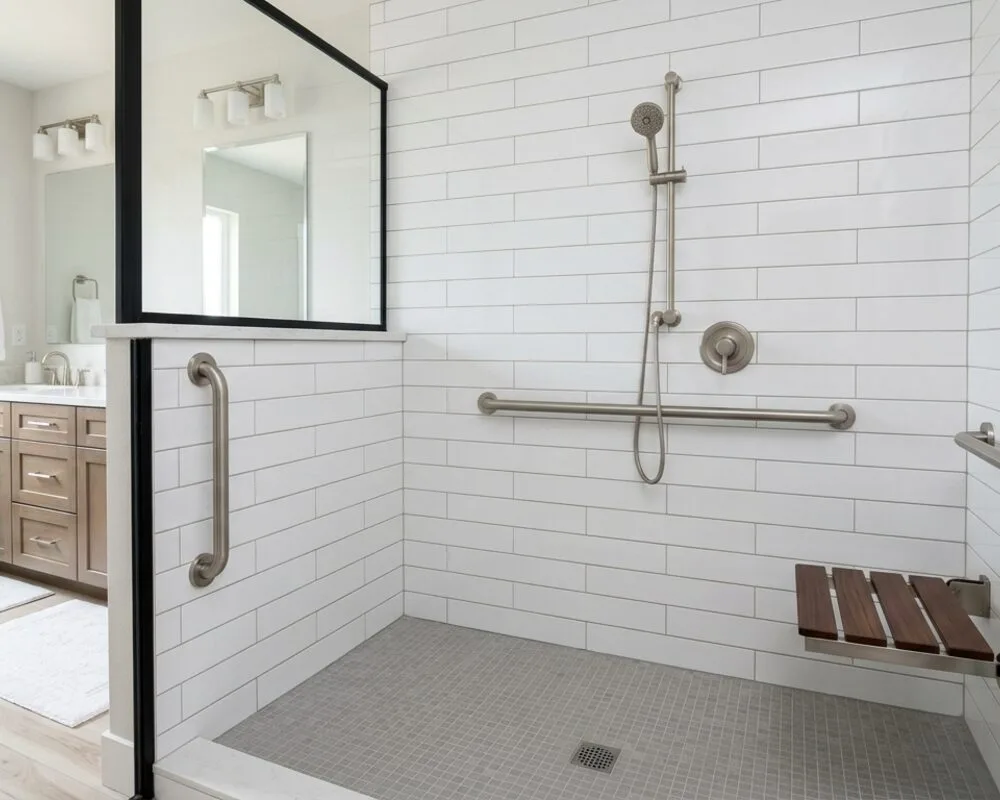
- A vertical bar at the entry. Mounted just outside or at the edge of the tub or shower opening, this is what a hand grips during the step in and out, the single most dangerous moment.
- A horizontal bar along the side wall. Mounted roughly 33 to 36 inches above the floor (the ADA guidance), this is the steadying rail while standing and washing.
- A bar beside the seat. If there is a built-in or fold-down seat, a bar within easy reach makes sitting down and standing up controlled movements instead of small falls.
- A bar near the toilet. Not glamorous, and one of the most-used bars in the house once it is there.
One thing we push back on: bars placed for looks and symmetry. A grab bar centered artfully on a wall that nobody reaches toward is decoration.
How they must be anchored
This is where most do-it-yourself and handyman installs fail. A grab bar must hold at least 250 pounds of sudden, sideways, jerking load. That means:
- Into solid backing or studs, never just drywall. Drywall anchors, even the heavy-duty ones, are rated for static shelf loads, not a falling adult. The bar rips out exactly when it is needed.
- Through the surround, into structure. In an acrylic tub or shower surround, the bar has to pass through the acrylic and bite into wood blocking behind it. When we do a tub-to-shower conversion, we install blocking in the walls as standard, so bars can be mounted anywhere, now or years from now, without opening the wall.
- Not into tile alone. Tile and thinset hold screws until they do not. The fasteners need to reach the framing behind the tile.
If you are retrofitting an existing wall and do not know where the studs and blocking are, that is a genuinely good reason to bring in a pro for an hour rather than trust a guess.
What fails, every time
- Suction-cup bars. They are sold as safety equipment and they are not. They lose vacuum silently, and they let go under sideways load. At most they are a light balance aid on glass-smooth surfaces, and we would not trust one with a parent's weight.
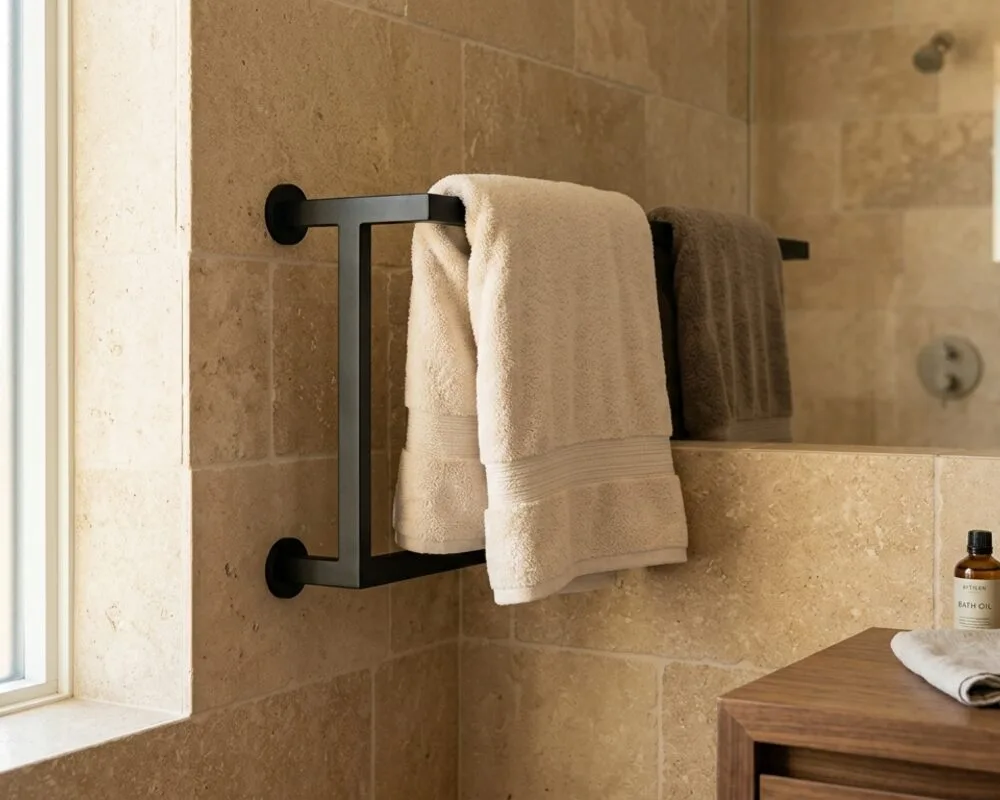
- Towel bars. They are designed to hold a towel, mounted with two small screws into drywall. Everybody grabs them anyway, which is exactly why bathrooms need a real bar in that spot instead.
- Glass shower doors. People stabilize themselves on the door frame every day. Doors flex, roll, and swing.
They do not have to look institutional
The hospital-chrome look is what makes proud parents refuse grab bars, and it is optional. Modern bars come in brushed nickel, matte black, and bronze finishes that match the rest of the fixtures, and some double as shelves or towel rails (rated as grab bars, unlike the reverse). In most of our accessible bathroom projects, guests never register the bars as medical equipment at all.
Frequently asked questions
What height should a bathroom grab bar be?
The ADA guidance for horizontal bars is 33 to 36 inches above the finished floor, and it is a good default. For a specific person, the better answer is where their hand naturally lands with a slightly bent elbow, which we check in the room with them there.
Can grab bars be added to an acrylic surround?
Yes, if there is solid backing behind the acrylic. The bar must be anchored through the surround into wood blocking or studs, never into the acrylic panel alone. Our conversions include blocking as standard so bars can be added or moved later without tearing the wall open.
Are angled grab bars better than horizontal ones?
We install angled bars sparingly. A hand can slide down an angled bar under sudden load, which is why accessibility standards lean on horizontal and vertical placement. There are cases where an angled bar fits a specific reach, but horizontal is the safer default.
How much do grab bars cost?
The hardware is cheap; the anchoring is the real work. Bars added during a remodel cost very little extra because the walls are already open, which is one more reason to fold them into a one-day conversion instead of bolting them on afterward. For a standalone retrofit, we quote it at the free in-home visit.