

When a parent starts struggling to get over the tub wall, most families quickly narrow the choice to two options: a walk-in tub or a walk-in shower. Both eliminate the 15-inch climb that causes so many bathroom falls. Beyond that, they are very different products, and picking the wrong one means spending real money on something your parent will quietly avoid using. We install both across Greater Pittsburgh, so here is the comparison we walk families through at the kitchen table.
A walk-in shower is the right call for most aging parents: nothing to step over, no waiting for water, easy for a caregiver to assist, and less expensive. A walk-in tub earns its higher price when the person genuinely loves baths or gets real relief from soaking. If a wheelchair is involved, it is a curbless shower, full stop.
What each one actually is
- A walk-in tub is a deep bathtub with a watertight door and a low step-in, usually around 4 inches instead of 15. You sit on a built-in seat, close the door, and fill the tub around you. It keeps soaking baths possible for someone who can no longer climb into a standard tub.
- A walk-in shower replaces the tub entirely. The old tub comes out, and in goes a shower with a low threshold or none at all, a built-in or fold-down seat, grab bars, and a handheld sprayer. Most of ours are done as a tub-to-shower conversion in one day.
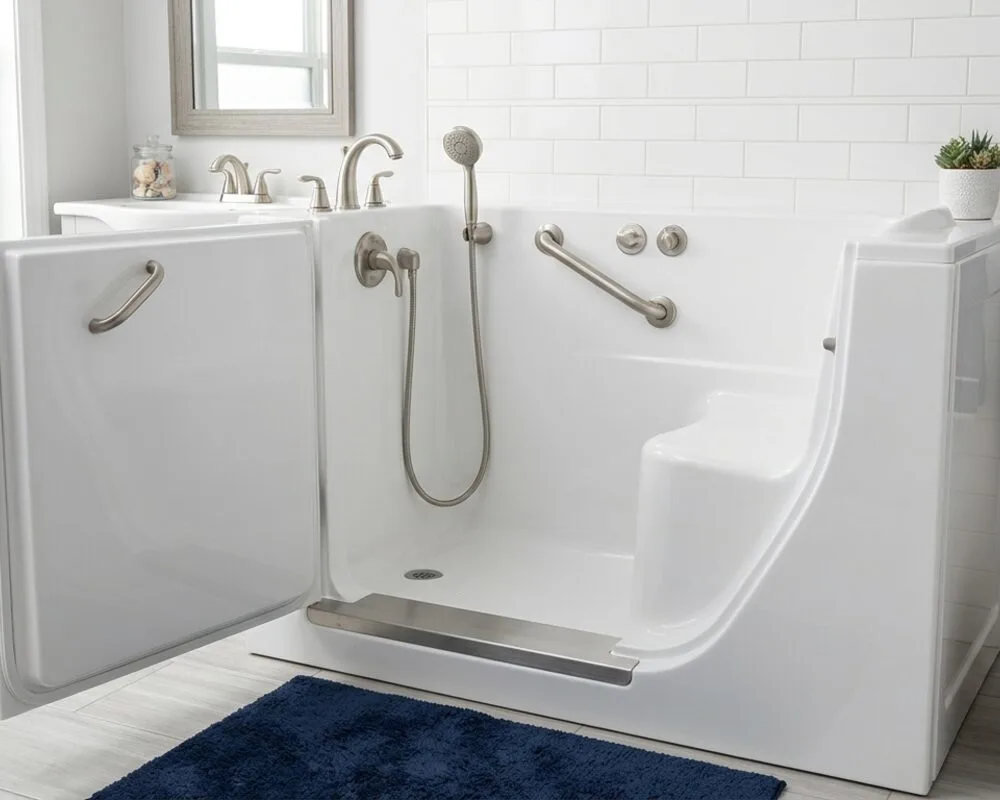
Where the walk-in shower wins
- No waiting. A walk-in tub fills from the inside, which means sitting in the tub for 8 to 12 minutes while it fills, and waiting another few minutes for it to drain before the door opens. A shower is instant. For daily use, that difference is bigger than people expect.
- Caregivers can help. A shower with an open entry and a handheld sprayer lets a spouse, an aide, or a visiting child assist with bathing. A closed tub door makes assisting much harder.
- No water heater surprises. Walk-in tubs hold 50 to 80 gallons, and a standard 40-gallon water heater runs out before the tub is full. Showers do not have this problem.
- Wheelchairs. If your parent uses a wheelchair or is heading that way, a walk-in tub is the wrong product entirely. A curbless shower lets them roll straight in.
- Price. A one-day shower conversion starts at $8,100. A quality walk-in tub is a bigger investment.
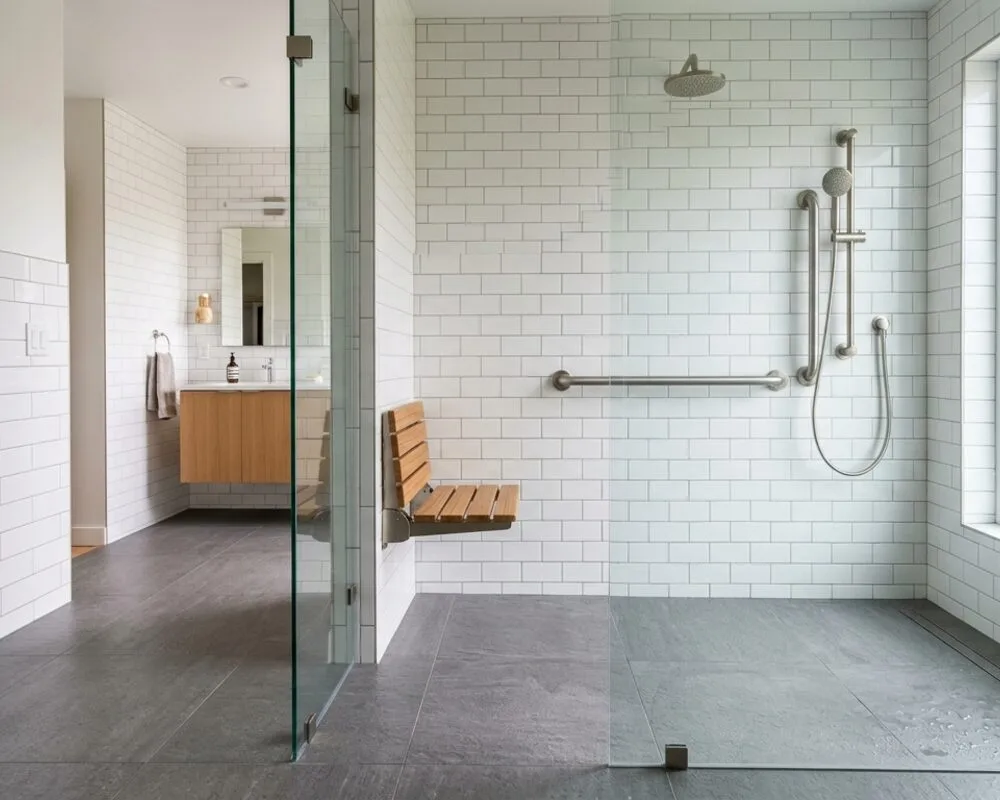
Where the walk-in tub wins
- Real soaking relief. For arthritis, circulation problems, or chronic pain, a warm soak is something a shower cannot replicate. If your parent takes baths now and would grieve losing them, this is the deciding factor.
- Hydrotherapy options. Air jets and water jets are available on better models, and for some users they are genuinely therapeutic rather than a luxury.
- It keeps a tub in the house. Some families simply want one, whether for grandkids or for resale peace of mind.
Our guide on whether walk-in tubs are worth it goes deeper on fill times, budget models to avoid, and the Medicare question.
The two questions that usually decide it
- Does your parent bathe or shower today? People do not change bathing habits at 80. A lifelong shower-taker will not start soaking because the tub has a door.
- Can they sit comfortably for ten minutes while the tub fills and drains? If the honest answer is no, the tub will not get used.
If both answers point to baths, look seriously at a walk-in tub. Otherwise, the shower is almost always the better daily tool.
Either way, insist on these details
The product matters less than the safety details around it. Whichever direction you go, make sure the install includes grab bars anchored into solid backing behind the wall (not just screwed into tile), a seat sized for the actual user, an anti-scald valve, a slip-resistant floor, and a handheld sprayer mounted within reach from the seat. Our post on bathroom grab bars explains why anchoring is the part most installs get wrong.
Frequently asked questions
Is a walk-in tub safer than a walk-in shower?
Neither is categorically safer. Safety comes from matching the product to the person's mobility: a low-threshold shower for someone unsteady on their feet, a curbless roll-in shower for wheelchair users, a walk-in tub for a bath-lover who can transfer and sit independently.
What if my parent uses a walker or wheelchair?
Choose a curbless or low-threshold shower with a wide entry. A walk-in tub still requires stepping over a small threshold and maneuvering through a narrow door, which is exactly what a walker or wheelchair user cannot do.
How long does the installation take?
Most of our tub-to-shower conversions and walk-in tub installs are done in one day by our own crew, never subcontractors. The bathroom is usable that evening, which matters when the person who needs it cannot go a week without a safe place to wash.
How much does each option cost?
One-day shower conversions start at $8,100, with most projects landing between $8,100 and $12,000. Walk-in tubs are priced at a free in-home visit because the model and options move the number. The instant quote calculator emails a real written estimate for shower work, and our accessible bathroom remodeling guide covers the honest Medicare and VA answer.