

Most of the aging-in-place calls we get in Pittsburgh do not come from the homeowner. They come from a daughter in Cranberry or a son in Mt. Lebanon who noticed dad gripping the towel bar, or found a bath mat wadded up against the tub, and has been carrying a quiet knot of worry ever since. According to the CDC, more than one in four adults 65 and older falls each year, and the bathroom, with its hard surfaces, water, and climbing, is where the worst of those falls happen. The good news: the bathroom is also the easiest room in the house to make dramatically safer.
Here is the checklist we would hand every adult child, in three parts: what to look for, what you can fix this weekend, and what genuinely needs a remodel.
An aging-in-place bathroom comes down to three things: remove the step over the tub wall, give the person something solid to hold and somewhere safe to sit, and make the floor, water and lighting forgiving. Everything below expands those three.
The ten-minute walkthrough
On your next visit, look at the bathroom the way an installer does. No clipboard needed, just notice:
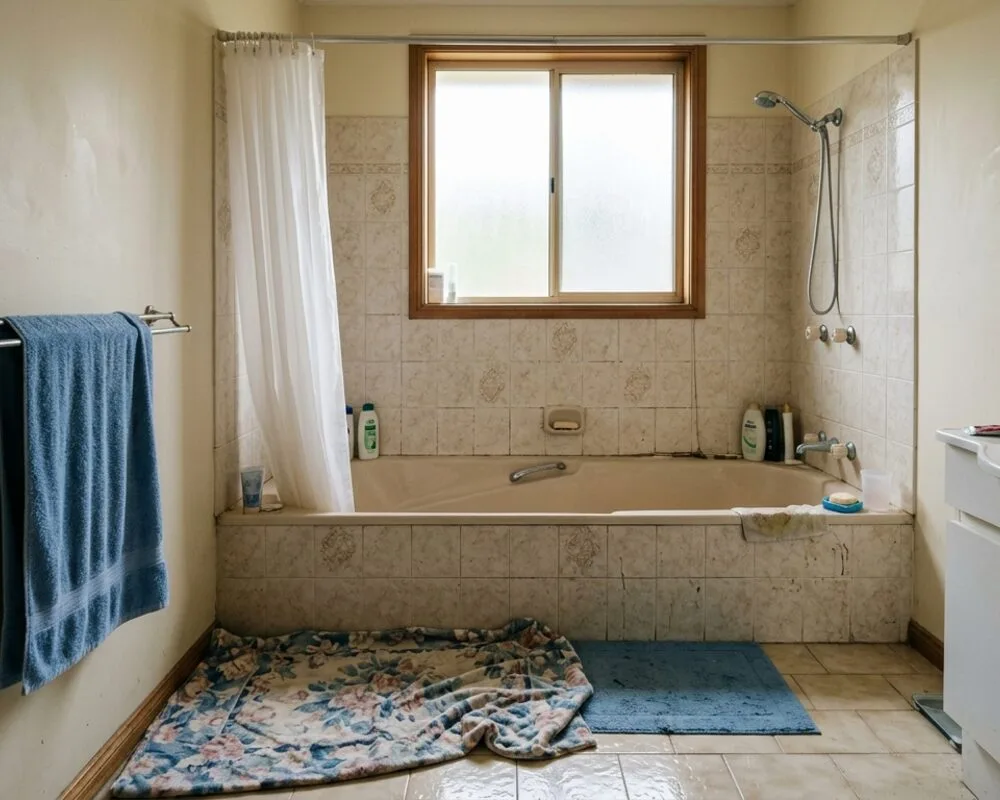
- The entry. Is there a 15-inch tub wall to climb over? This is the single biggest hazard in the room. Watch how your parent actually gets in, or ask them to show you. Hesitation, a hand on the wall, a deep breath first: those are answers.
- What they grab today. Towel bar? Glass door? Soap dish? Sink edge? Wherever a hand instinctively goes is where a real grab bar belongs, and none of those substitutes will hold a falling adult.
- The floor. Glossy tile that turns slick when wet, loose throw rugs, a curled bath-mat edge. Rugs cause an outsized share of home falls.
- Somewhere to sit. Is bathing done entirely standing? Fatigue and balance problems make a seat the difference between independence and needing help.
- Reaching the controls. Can the water be turned on and adjusted from outside the tub or from the seat, or does it require leaning across the danger zone?
- Water temperature. Aging skin scalds faster. Is there an anti-scald valve, or is the water heater simply set to whatever it was in 1998?
- Light and the night path. Is the route from bed to bathroom lit without hunting for switches? Most bathroom trips that end badly happen at night.
- The door. Does it open inward with a privacy lock? An inward-opening locked door is a real problem if someone falls against it. Lever handles beat knobs for arthritic hands.
What you can fix this weekend
None of this requires us, and we would rather you do it today than wait for a project:
- Remove the throw rugs, or replace them with rubber-backed mats that do not slide.
- Add plug-in motion nightlights along the bed-to-bathroom route.
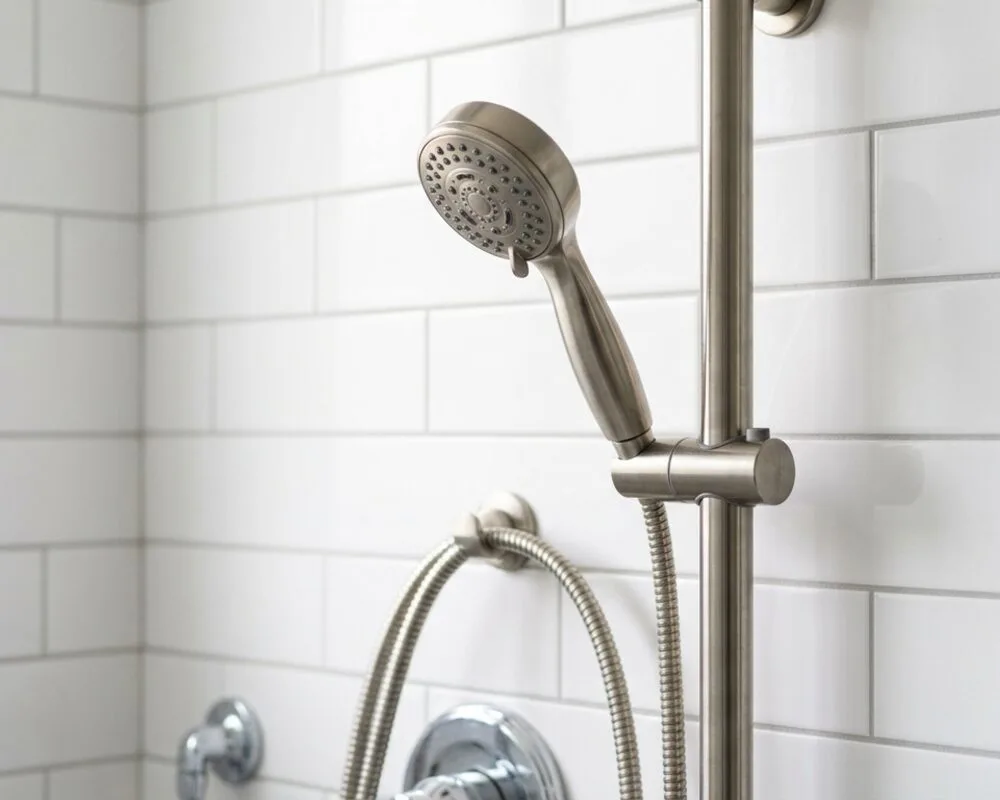
- Swap the showerhead for a handheld model on a slide bar.
- Turn the water heater down to 120°F.
- Put a proper non-slip mat or adhesive strips in the tub until the real floor is sorted.
These are small-dollar fixes, and they buy safety immediately.
What needs a real remodel
Some hazards cannot be patched around:
- The tub wall itself. No mat or bar removes the climb. A tub-to-shower conversion with a low or curbless entry eliminates it, and we do most of them in one day.
- No safe seating. A built-in or fold-down seat, sized and placed for the actual person, is a remodel-level item done right.
- Nothing solid to anchor bars into. Grab bars need blocking behind the wall. A conversion builds it in everywhere, so bars can move as needs change.
- A wheelchair or walker on the horizon. Thresholds, door widths, and turning space need to be designed, not improvised. Our accessible bathroom remodeling guide covers the options, costs, and the honest Medicare and VA answer.
If the choice comes down to keeping baths versus moving to a shower, our walk-in tub vs. walk-in shower comparison walks through the two questions that decide it.
How to bring it up with a proud parent
This is the part families dread more than the cost. What we have seen work, across thousands of these projects:
- Frame it as staying, not declining. The National Institute on Aging calls it aging in place for a reason: the remodel is what keeps them in their own home, on their own terms. "I want you here for years" lands better than "I'm worried about you."
- Let them choose. Colors, fixtures, seat placement, whether the grab bars are matte black or brushed nickel. The more it feels like their remodel rather than your intervention, the faster the yes.
- Mention that it does not look medical. Modern accessible bathrooms read as upscale, not institutional. Showing a few photos from our projects page does more than any argument.
- Lead with the one-day part. Older adults often resist because they picture a week of strangers and dust and no working bathroom. Most of our conversions are done in one day by our own crew, and the bathroom works that evening.
Frequently asked questions
When is it time to remodel a parent's bathroom?
Before the first fall, ideally. The practical triggers: any hesitation getting over the tub wall, a recent hip or knee surgery, a new walker or cane, or a near-miss you heard about secondhand. If you are already worried enough to read checklists, it is time to at least price it.
How much does an aging-in-place bathroom remodel cost?
One-day shower conversions start at $8,100, with most projects between $8,100 and $12,000 depending on access, fixtures, and finishes. Walk-in tubs are priced at a free in-home visit. The instant quote calculator emails a written estimate without a sales call.
Does Medicare or the VA help pay for it?
Sometimes, partially, when it is documented as medically necessary, and the paperwork is real. Start with your VA service officer or long-term-care insurance carrier, and see the honest breakdown in our accessible remodeling guide.
Can the work really be done in one day?
For most tub-to-shower conversions, yes. The crew arrives in the morning, the old tub comes out, and the new shower, seat, grab bars, and floor go in the same day, which matters when the person who needs the bathroom cannot go a week without it. Our one-day remodel guide shows how that is possible without cutting corners.